Serving The Steel Industry For Over 45 Years

Used Corrugated Steel Bins & Corrugated Metal Bins for Sale
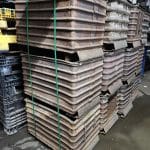
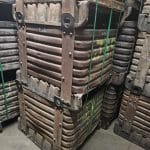
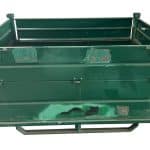
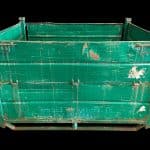
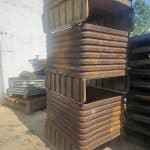
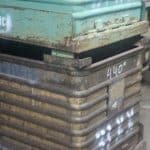
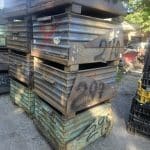
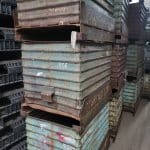
RDR stocks used corrugated steel bins — corrugated metal bins built from folded steel panels on a hollow structural tubing frame, which makes them stiffer than flat sheet-metal bins and the usual choice for heavy, hot or abrasive parts: castings, forgings, stampings, scrap and machined components. Most carry one or two half drop gates and two- or four-way fork entry, and nearly all stack. Every bin is reconditioned: repaired if needed and fully functional, though not cosmetically like-new — expect scratches, chipped paint and dings. Looking for flat-sided sheet-metal bins as well? See all used metal bins and steel bins for sale. Construction and capacity notes are below the listings.









Corrugated Steel Bins: Buyer's Guide
- Steel Bin Sizes & Load Capacity: A Buyer's Guide — gauge, capacity and dimensions explained
- What "Reconditioned" Means When You Buy From RDR — what's guaranteed (function) and what isn't (cosmetics)
- Used vs. New Steel Bins: What's the Real Difference?
- The Origins of the Steel Corrugated Bin — where the design came from and why it stuck
- Shipping Steel Bins Across the Canada–US Border
Why corrugated
A corrugated bin uses folded steel panels in place of flat sheet. The folds act as stiffening ribs, so the sides resist bowing and warping under heat, impact and repeated loading. That is why corrugated bins are the usual choice for foundry castings, forgings, hot stampings, production scrap and anything with sharp edges — a flat sheet-metal bin of the same gauge will dent and bulge where a corrugated panel holds its shape.
Construction
The skeleton is the same as any solid steel bin: four hollow structural tubing posts welded to a framed floor with cross members under the deck. Corrugated panels are welded to that frame for the sides and, on most units, the floor. Many carry one or two half drop gates that fold down so workers can reach the contents without unloading. Flat bar across the bottom of the posts forms runners for fork entry — two-way on some units, four-way on most — and lets an operator lift and rotate the bin to empty it. Some units add lifting lugs or hairpin stacking hoops.
Capacity
Working capacity comes from panel gauge and floor construction, not footprint. Heavier gauge and more floor cross members mean a higher safe load and a longer service life, so two corrugated bins with the same outside dimensions can be rated differently. Check the listing dimensions (OA = overall, inside height where given) and ask if the margin matters for your load.
Sizing
Common footprints run from roughly 24" × 36" up to 48" × 96", with overall heights from 20" to 50". Width is usually chosen for the trailer as much as for the part: 48"-wide bins sit two across in a 53-foot trailer, and 30"–33" bins sit three across.