Serving The Steel Industry For Over 45 Years

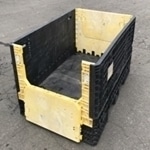

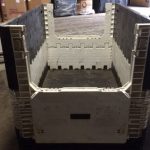
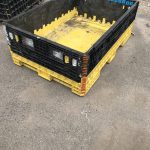
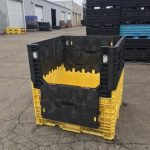
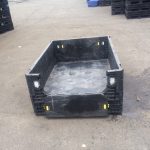
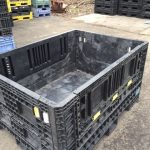
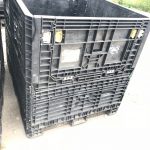
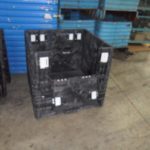
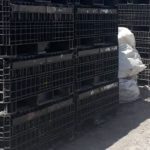
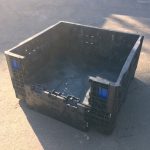

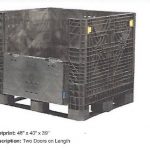

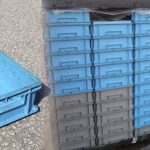
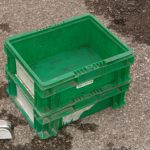
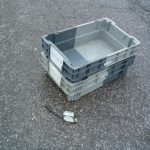
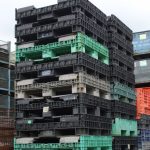
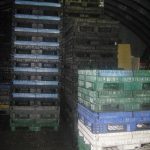
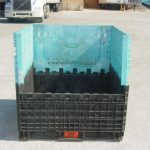
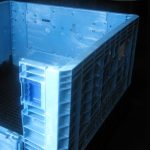
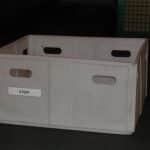
Every bin in this category is reconditioned — repaired where needed and fully functional, not cosmetically like-new. Expect scratches, fading, and normal wear from prior use; these are commercial and industrial storage pieces built to work, not showroom pieces. HDPE plastic holds up well against sun, heat, and freezing, so cosmetic wear doesn't mean reduced strength.
Buyer's guides for this category:
- Plastic Knock-Down Bin Sizes & Capacity: A Buyer's Guide
- Used vs. New Plastic Bins: What's the Real Difference?
- Plastic Bins by Industry
- What "Reconditioned" Means for Plastic Bins at RDR
- Shipping Across the Canada–US Border: What to Expect
Save Valuable Space with Collapsible & Returnable Bins Whether in the warehouse or in transit, every bit of space is valuable. Collapsible and returnable bins allow you to make the most of every square inch, and they were originally created for use in the auto industry. They were put to good use carrying OEM parts to the assembly lines. Just a few of the many benefit of the use of these storage devices include: Helps reduce costs Access doors provide easy accessibility Standardized heights make it easy to stack There are many collapsible bins on the market, making it easy to find one to fit your specific needs. These Plastic Collapsible Bulk Boxes, Bins, have 4 runners on the bottoms of the bins. They are also 4-way entry for the fork lifts. The runners prevent the plastic collapsible bins from tipping off the fork lift when travelling over uneven terrain. These Bulk Boxes are possibly rotatable with light loads in them. Some of these Plastic Collapsible Bulk Boxes have 2 half drop gates and some have 4 half drop gates. Depending on the size, application and manufacturer, they could have solid floors or grated vented floors. The vented floors allows for ventilation and drainage if stored outside of facility, and exposed to the elements. Once these Plastic Knock Down Bins are damaged it is possible to repair them by replacing broken latches and gates to produce a repaired refurbished Plastic Collapsible Container. These refurbished plastic collapsible bulk boxes are then sold at a reduced reasonable price allowing companies to experience a cost savings when expanding and adding to their container fleets. When damaged plastic bulk bins are purchased for refurbishing, the bins are cannibalized, (taking parts from different bins to produce a refurbished collapsible bulk box). During the refurbishing process, debris is removed, dunnage is removed and then they are completely inspected. Any parts that are not usable are sent to a facility that recycles plastic where the plastic parts are ground to small pieces. After this, the ground plastic is sold in different grades to be melted in processes to produce new plastic products. Two grades of ground plastic are the following: HDPE: plastic collapsible containers, bulk boxes, pallets, auto parts, and packaging, (dunnage). 2nd is ABS: plastic for electronics. Some ground plastics are sold and bought by companies that have injection molding machines. These injection molding machines are used to produce a large variety of plastic parts and products. The ground plastic is placed in the injection molding machine where it is melted. It proceeds or injected into the mold, where after time, it's temperature lowers and the plastic becomes hard resulting in the new part or product. There is also an extrusion molding process. In this process the melted plastic is forced through a two-dimensional die opening. I previously mentioned 2 types of plastic. In total, today, there are actually 7 types of plastic. They are as follows: #1: Polyethylene Terephthalate, (PET or PETE, or Polyester). #2: High Density Polyethylene, (HDPE). #3: Polyvinyl Chloride, (PVC). #4: Low-Density Polyethylene, (LDPE). #5: Polypropylene, (PP). #6: Polystyrene, (PS). #7: other. The most commonly recycled plastic is HDPE, It is also believed to be very safe. HDPE plastic is very durable. Sunlight or extreme heating or freezing does not effect the strength and longevity of this plastic. When these new parts or products are being manufactured with the use of the injection molding or extrusion molding machines, the ground plastic, that's used, can be made into different colored products by the addition of various desired colored dyes. Usually a plastic injection mold is good to produce approximately up to one million or more parts and products. The cost of the molds is dependent on the material used to make the mold. The different grades of steel that are machined determine the quality of the mold and therefore result in a different quantity of parts that can be manufactured. The higher quality of steel used would be more costly and result in more product.