Serving The Steel Industry For Over 45 Years

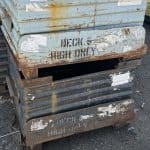
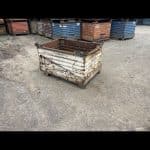
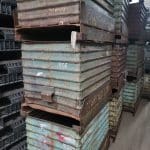
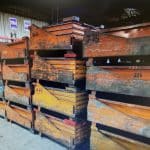
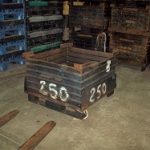
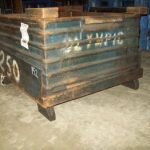
Every bin RDR sells is reconditioned — repaired if needed and fully functional, though not cosmetically like-new. Expect scratches, chipped paint, and dings; these are commercial and industrial storage pieces, not showroom equipment. Drop-bottom bins discharge their contents from below, which makes them a different tool from a standard bin or a self-dumping hopper. Sizing, capacity, and a full buyer’s guide are below the listings.


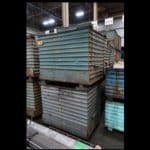
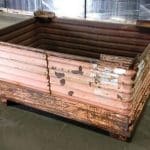
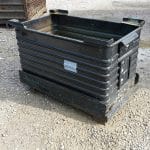
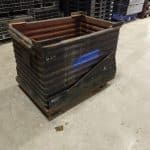

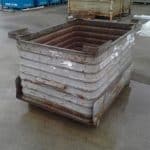
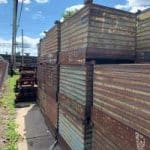
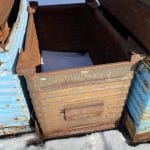
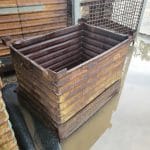

Drop-Bottom Bins: Buyer's Guide
- What "Reconditioned" Means for Drop-Bottom Bins at RDR
- Drop-Bottom Bin Sizes & Capacity: A Buyer's Guide
- Used vs. New Drop-Bottom Bins: What's the Real Difference?
- Drop-Bottom Bins vs. Self-Dumping Hoppers: What's the Difference? — read this first if you're shopping for a hopper; they are not the same mechanism
- Shipping Steel Bins Across the Canada–US Border: What to Expect
How the mechanism works
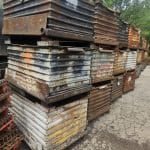
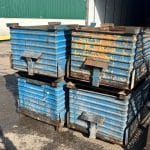
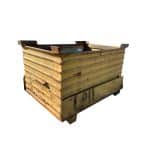
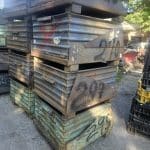
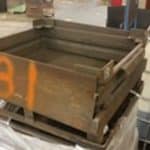
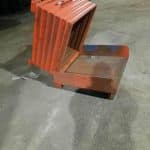
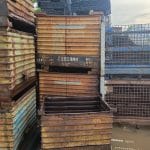
Drop-bottom bins are usually built with corrugated steel sides. One end of the floor is hinged. When a forklift lifts the bin by the steel protrusions on its upper sides, the unhinged end of the floor swings down and the contents discharge from underneath, straight to the station below.
The drop-bottom feature is optional in use. Lifted from underneath with forks in the normal way, the bin behaves as an ordinary solid bin.
Construction and stacking
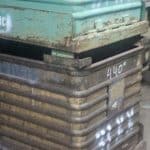
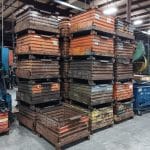
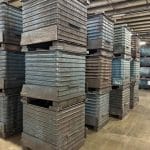
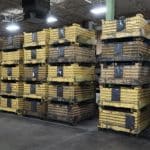
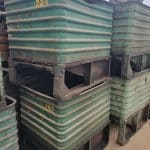
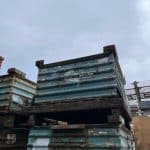
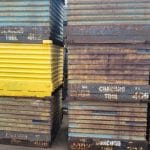
These are heavy-duty units — the mechanism and the loads they handle require it, and it is also what gives them their service life. They stack, and safe stack height depends on the strength of the structure and the weight of the contents. Fork entry is four-way on most units and two-way on some.
What reconditioning covers here
Because a drop-bottom bin has moving parts, reconditioning covers the hinge and gate mechanism as well as the frame and panels — repaired where needed and fully functional, though not cosmetically like-new.